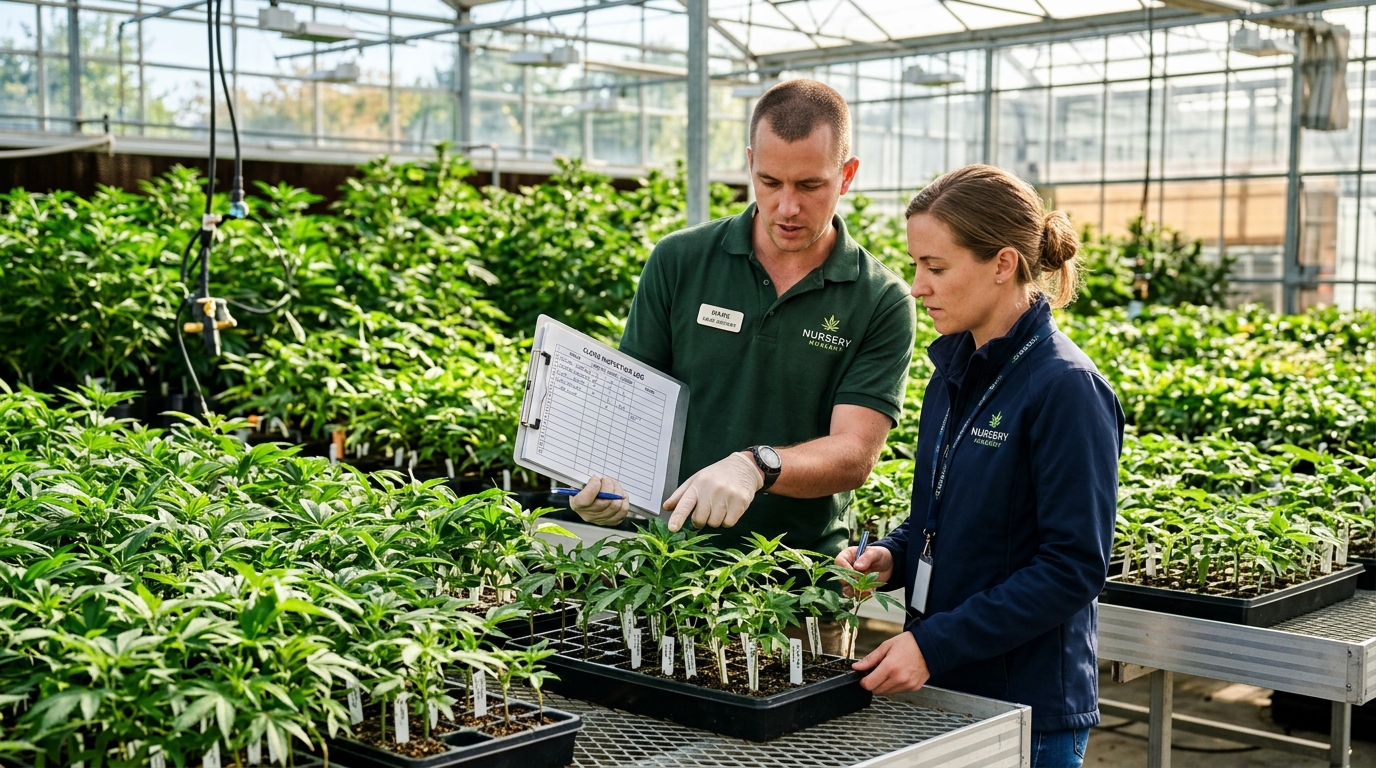
Buying cannabis clones online has become a legitimate e-commerce category — but the market is still maturing. Some suppliers run professional tissue culture labs with quarterly PCR pathogen testing and documented breeder provenance on every strain. Others operate with no testing, no guarantees, and genetics of uncertain origin. The difference between the two can cost you months of work and thousands of dollars. Before you place your next clone order, run every supplier through these seven questions. They're designed to separate professional operations from the rest — objectively. No supplier names, no competitor mentions. Just the checklist every grower should keep handy. 1. Do They Test Every Mother for HLVd? Hop Latent Viroid (HLVd) is the most destructive pathogen in cannabis cultivation today. Over 62% of commercial facilities have reported HLVd-positive plants at some point, and infected plants can go months without showing visible symptoms while quietly devastating yields. A reputable clone supplier tests every mother plant quarterly using molecular PCR methods — not just once, not just visually, and not just the plants that look sick. HLVd spreads through shared tools, water, and even casual contact between plants. What makes it particularly dangerous is the dormancy period: a plant can carry the viroid for an entire vegetative cycle before showing symptoms like stunted growth, reduced trichome production, and dramatically lower cannabinoid content. By the time you notice, you've already lost the yield — and contaminated your entire grow space. What to ask Do you test every mother plant, or just the ones that look symptomatic?What pathogens do you screen for — HLVd, Fusarium, Pythium, Tobacco Mosaic Virus?What testing method do you use (PCR, ELISA, or visual only)?How often is testing performed — quarterly, annually, or only at intake?Can I see the test results for this specific batch before shipping? Red flag No test results available on request, or testing only performed "as needed." If a supplier can't produce a dated PCR report for the specific mother plant your clone came from, they're gambling with your grow — and you're the one who loses. If you want to understand why testing matters at every stage, read our guide on HLVd testing for cannabis clones. 2. Do They Use Tissue Culture Propagation? Traditional cloning — cutting a branch from a mother plant and rooting it — can carry latent pathogens across generations without visible symptoms for months. Tissue culture (micropropagation) starts from sterile meristem tissue in a lab environment, producing clones that are pathogen-free from day one. It's more expensive and technically demanding, which is why many suppliers skip it. But for serious growers, the difference between a tissue-culture clone and a traditional cutting is the difference between certainty and rolling the dice. Tissue culture also offers another advantage most buyers don't consider: genetic preservation. When you receive a tissue-culture clone of a strain like Gelato 33, you're getting a plant that's genetically identical to the original breeder selection — preserved in sterile media without the accumulated stress and epigenetic drift that affects mother plants over multiple cutting cycles. Traditional cuttings from an aging mother plant can show reduced vigor, slower rooting, and inconsistent terpene expression by the third or fourth generation. What to ask Are your clones propagated through tissue culture or traditional cuttings?What's your lab's sterility protocol, and how often is it audited?Do you charge differently for tissue-culture vs. traditional clones?How many subculture cycles has each strain gone through before sale? Red flag No tissue culture program — all traditional cuttings with no documented sterility protocol. Or worse, claiming "lab-grade" propagation without being able to describe the process in detail. A real tissue culture operation can walk you through their workflow step by step. Learn more in our tissue culture and micropropagation guide. 3. Can They Document Breeder Provenance on Every Strain? A clone's value comes from its genetics, and genetics are only as good as their source. Two clones both sold as "Gelato" from different suppliers may be completely different plants — different phenotype, different terpene profile, different growth characteristics. Reputable suppliers trace every strain back to its breeder and provide documentation of the specific cut. Consider GMO (Garlic Mushroom Onion), one of the most sought-after strains for hash makers and high-THC growers. The authentic Skunkmasterflex cut is legendary for its 30%+ THC potential and heavy resin production — but there are dozens of GMO "versions" circulating that share a name but not the genetics. Without provenance, you're buying a label, not a plant. The same applies to Super Boof, where the authentic Blockberry cut from Mobile Jay is the difference between a premium washer strain and a generic fruity hybrid. What to ask Who bred this strain, and when?What generation is the mother plant?Is this a verified phenotype from the original breeder's pheno-hunt?Can you provide breeder authorization or licensing for this specific cut? Red flag Can't name the breeder, or says it's a "mystery cut" with no verifiable origin. Another classic: "We got it from a friend who knows the breeder." If the chain of custody can't be documented, the genetics can't be trusted. 4. Is Their Pricing Transparent and Published? Quality clones cost what they cost because real testing, proper facilities, and skilled labor aren't cheap. But pricing should be transparent — you should know the per-clone price, volume discounts, shipping costs, and minimum order requirements before you commit. Suppliers who hide pricing until you contact them, or quote different prices to different customers, are worth scrutinizing. Market-rate pricing for professional tissue-culture clones typically falls between $25 and $100 per clone, depending on the strain, the supplier's testing overhead, and volume. Expect to see price tiers: single-unit, 6-pack, 12-pack, and commercial trays. Strains like Biscotti OG and Pink Zkittles often command premium pricing due to demand and breeder licensing requirements — but that premium should be clearly listed, not negotiated case-by-case. What to ask Is your pricing published on your website?What are your minimum order quantities per strain?Are there volume discounts for 12+ or 50+ clone orders?What does shipping cost, and is it flat-rate or distance-based?Are there wholesale tiers for commercial growers? Red flag No published pricing, or prices significantly below market rate ($25-$100 per tissue-culture clone). A $10 tissue-culture clone isn't a deal — it's almost certainly not tissue culture at all. Also watch for hidden fees: a low per-clone price with a $200 shipping fee for a $50 order. 5. Do They Guarantee Live Arrival? Shipping live plants is inherently risky — temperature swings, transit delays, and rough handling happen. A professional supplier stands behind their shipping with a live-arrival guarantee. If plants arrive damaged or dead, they're replaced at no cost. This isn't a nice-to-have; it's the minimum standard for any professional clone supplier. The best guarantees cover more than just "dead on arrival." Look for policies that address partial damage (two out of six clones arrive damaged), weather-related delays (a heat wave hits during transit), and carrier mishandling. A supplier who ships clones in insulated packaging with temperature monitoring and humidity control is investing in your success before you even open the box. What to ask What exactly does your live-arrival guarantee cover?Is weather-related damage covered, or is it excluded?What's the claim window — 24 hours, 48 hours, or upon delivery?Do you require photo or video evidence for a claim?How quickly do replacements ship after a valid claim? Red flag No guarantee at all, or a guarantee that excludes "weather-related" or "transit" damage — which covers nearly every failure scenario. Also watch for guarantees that require the customer to pay return shipping on dead plants, or only offer store credit instead of replacements. 6. What Are Other Growers Saying? The cannabis growing community talks. Forums like Overgrow, Rollitup, and the HLVd Forum are goldmines of real grower experiences with specific suppliers. Look for patterns: a single complaint is a data point; multiple growers reporting the same issue across different platforms is a warning sign. Pay attention to how suppliers handle problems when they arise — every operation has occasional issues, but the response reveals their professionalism. Don't just search for complaints — look for grow diaries. A grower who documents a full cycle from clone to harvest cycle with photos tells you more than any supplier's marketing page ever could. You'll see real growth rates, real flowering structures, and real yield numbers — not the best-case scenario from the supplier's test room. Pay special attention to growers running the same strains you're considering, in a similar setup to yours. What to ask (yourself) Search for the supplier's name in growing forums — what's the overall sentiment?Look for mentions of HLVd, pest problems, or mislabeled strains.How did the supplier handle complaints — ignore, deflect, or resolve?Are there grow diaries documenting full cycles from this supplier?Check Reddit, Discord servers, and Instagram comments — not just major forums. Red flag Multiple growers across different platforms reporting the same problem with no documented resolution. Or worse: the supplier has scrubbed negative reviews, only allowing positive testimonials, or responds to criticism with hostility rather than accountability. 7. Do They Ship to Your State with Proper Compliance? Cannabis clone shipping laws vary by state. A legitimate supplier knows exactly which states they can and cannot ship to, can explain the legal framework they operate under (typically the 2018 Farm Bill for hemp-compliant clones under 0.3% Delta-9 THC), and includes compliance documentation with every shipment. State laws are changing rapidly. A supplier who was compliant in 2024 may not be in 2026, and new restrictions on interstate commerce are being proposed in multiple state legislatures. The best suppliers stay ahead of regulatory changes and proactively update their shipping maps — not wait for a cease-and-desist letter. They should be able to tell you exactly which statute or regulatory framework authorizes shipment to your specific state, with documentation you can verify independently. What to ask What specific states do you ship to — and which are explicitly excluded?Under what legal framework (Farm Bill, state program, etc.)?Is compliance documentation included with every order?Do you require a cultivation license or personal-use declaration?How do you handle states with evolving or ambiguous regulations? Red flag Claims to ship to all 50 states with no discussion of compliance or the specific legal framework. Or vague language like "we operate within applicable laws" without naming any specific statute. If a supplier can't cite chapter and verse of the legal authority for shipping to your state, they're asking you to assume the legal risk. The Bottom Line The clone market is maturing, and with that maturity comes a range of quality and professionalism. These seven questions aren't about finding the cheapest option — they're about finding a supplier you can trust with your grow. Because when you're months into a grow cycle, the difference between clean genetics and contaminated stock isn't theoretical. It's thousands of dollars and months of lost work. Apply this checklist to any supplier you're considering. Then see how Clone Source measures up — quarterly PCR testing on every mother, tissue culture propagation, documented breeder provenance on every strain, live-arrival guaranteed, and transparent pricing. Ready to place an order? Browse our verified strain catalog or read our full buyer's guide.
Frequently Asked Questions How do I know if a clone supplier is legitimate? Start with the seven questions in this guide. A legitimate supplier will answer all of them directly, provide documentation on request, and have a verifiable track record in grower communities. Red flags include no published pricing, no testing documentation, and vague or evasive answers about provenance or propagation methods. What's the difference between a tissue culture clone and a traditional cutting? Tissue culture clones start from sterile meristem tissue in a lab and are pathogen-free from day one. Traditional cuttings are snipped from a mother plant and rooted — they can carry latent pathogens across generations. For a deeper dive, see our tissue culture guide. Why does breeder provenance matter? Two clones sold under the same strain name from different suppliers can be genetically different plants. Provenance — documented lineage from the original breeder — is the only way to know you're getting the phenotype you expect. Without it, you're trusting a label, not genetics. Strains like Gelato 33 from the original Larry Bird cut have specific traits that generic "Gelato" clones may not share. How much should I expect to pay for quality clones? Professional tissue-culture clones typically range from $25 to $100 per clone depending on the strain, volume, and supplier. Prices below this range often indicate cuts without proper testing or tissue culture propagation. Volume discounts are common for orders of 12 or more. Can clones be shipped across state lines legally? Under the 2018 Farm Bill, hemp-compliant clones (under 0.3% Delta-9 THC) can be shipped across state lines, but state-level restrictions vary significantly. A compliant supplier will clearly communicate which states they ship to, under what legal authority, and include compliance documentation with every order. Always verify your state's current regulations before ordering.
Disclaimer: The information provided on this website does not, and is not intended to, constitute legal, medical, or professional advice. Cannabis cultivation and purchase are subject to state and local laws. Always verify your state's regulations before purchasing or cultivating cannabis. ⚠️ 21+ only. Do not operate a vehicle or machinery under the influence.