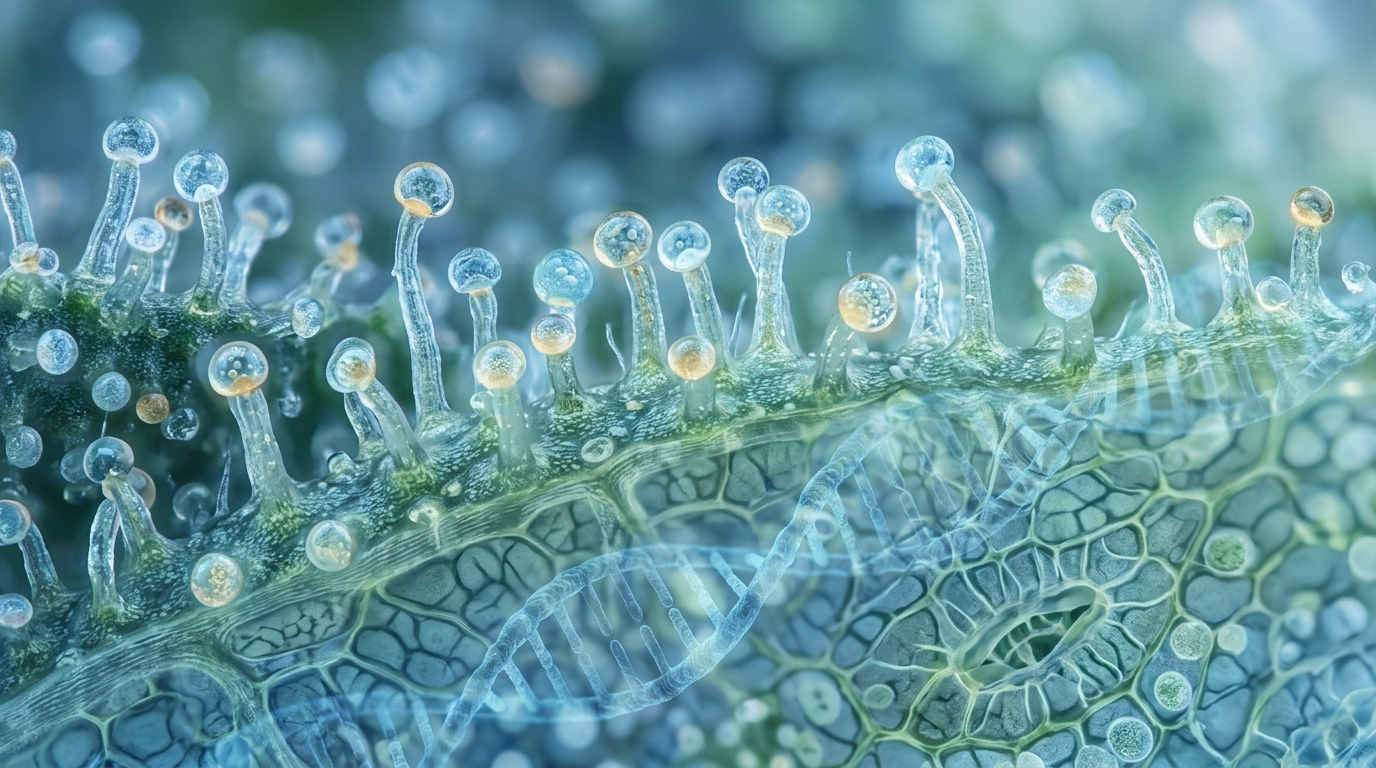
Understanding cannabis at a biological level is essential for anyone serious about cultivation, breeding, or genetic preservation. Cannabis sativa L. is an annual, dioecious (having separate male and female plants) species in the Cannabaceae family. Its biology is complex and fascinating: a C3 photosynthetic pathway that responds dramatically to CO2 enrichment, a photoperiod-dependent flowering mechanism that breeders have been manipulating for decades, and a secondary metabolite production system — the trichome — that synthesizes over 550 identified chemical compounds. Let's break down each layer. Photosynthesis in cannabis follows the C3 pathway, meaning the first stable product of carbon fixation is a 3-carbon compound (3-phosphoglycerate). C3 plants are generally less water-efficient than C4 plants like corn, but they respond more strongly to elevated CO2 levels. This is why CO2 supplementation (maintaining 1200-1500 ppm) can increase cannabis yields by 20-30% — the plant's photosynthetic machinery is directly limited by CO2 availability under high light conditions. Understanding this is critical for indoor growers: there's no point running CO2 if your light levels aren't high enough to create a CO2 bottleneck. The photoperiod response in cannabis is controlled by phytochrome, a photoreceptor protein that exists in two interconvertible forms (Pr and Pfr). During long days (more than ~14 hours of light), the Pfr form accumulates and suppresses flowering. When nights lengthen, Pfr converts to Pr, removing the suppression and triggering the flowering cascade. This is why indoor growers switch from 18/6 to 12/12 to induce flowering — the uninterrupted dark period is what matters, not the light period. Even a brief light interruption during the dark cycle can convert Pr back to Pfr and disrupt flowering, which is why light leaks are one of the most common causes of hermaphroditism in indoor grows. Autoflowering cannabis deserves special attention because it subverts the normal photoperiod mechanism. Autoflowers contain Cannabis ruderalis genetics, which evolved in northern latitudes where growing seasons are short and day length varies dramatically across the season. Instead of responding to photoperiod, autoflowers flower based on age — typically beginning after 3-4 weeks of vegetative growth regardless of light cycle. This trait makes autoflowers appealing for outdoor growers in short-season climates, but it also means they can't be kept as mother plants for cloning in the traditional sense. The autoflowering trait is recessive, so breeding stable autoflower lines requires careful selection over multiple generations. Trichomes are the factories where cannabis produces its most valuable compounds. These glandular structures appear primarily on the female flowers (calyxes and sugar leaves) and come in three types: bulbous (small, 10-15 μm), capitate-sessile (medium, 25-100 μm), and capitate-stalked (large, 150-500 μm). The capitate-stalked trichomes are the heavy lifters — they produce the majority of cannabinoids and terpenes. Inside each trichome, the biosynthetic pathway starts with CBGA (cannabigerolic acid), the 'mother cannabinoid,' which is then converted by synthase enzymes into THCA, CBDA, CBCA, and other cannabinoid acids. The specific synthase enzymes a plant expresses determine its chemotype — whether it will be THC-dominant, CBD-dominant, or a balanced chemotype. This is why genetic testing matters: you can't look at a plant and know its cannabinoid profile any more than you can look at a person and know their blood type.
The Kluar Biology of Cannabis
2026-07-08 — Education