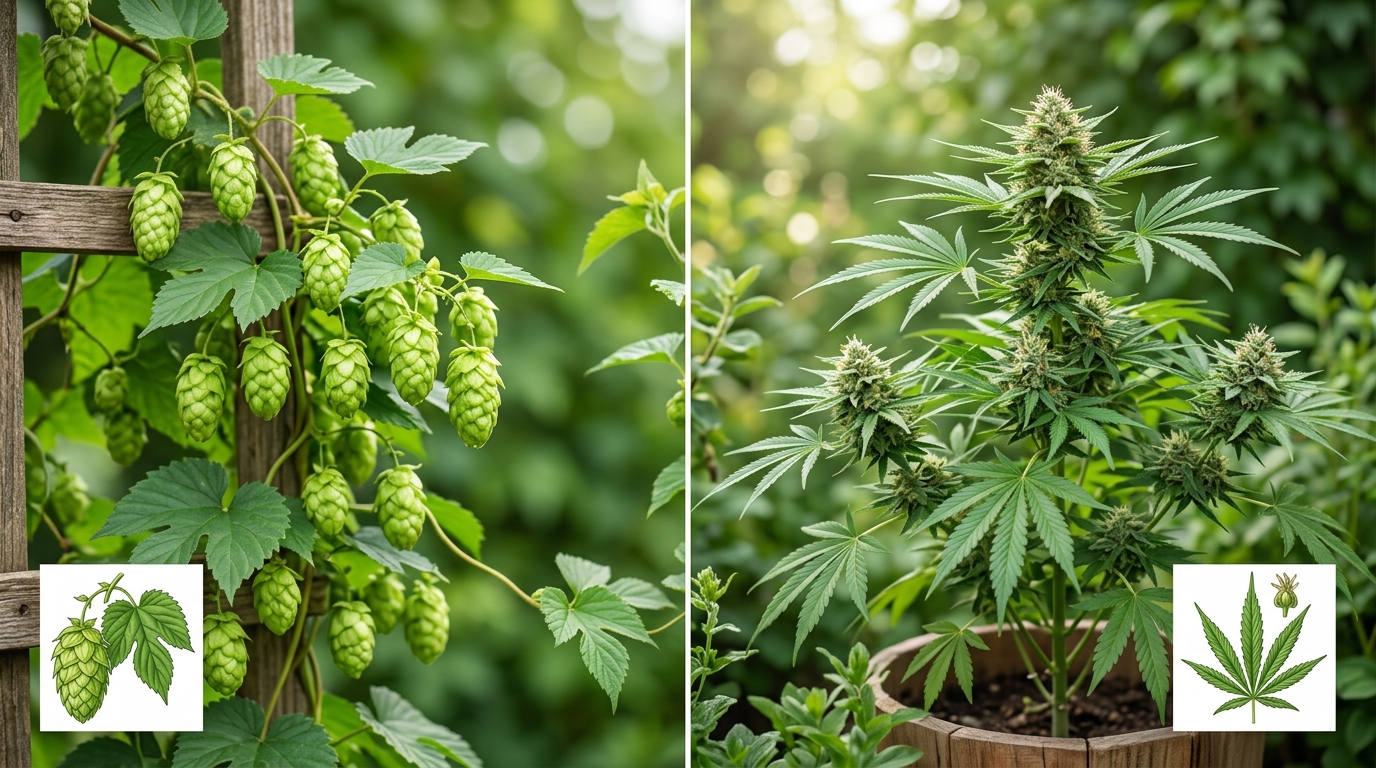
Hops and cannabis share more than a passing resemblance. Both belong to the Cannabaceae family, making them botanical cousins with a common ancestor that lived roughly 28 million years ago. This close relationship explains many of their shared characteristics: both produce resinous flowers rich in terpenes, both are dioecious (having separate male and female plants), and both have been cultivated by humans for thousands of years for their psychoactive and medicinal properties. The similarities run deep enough that hops and cannabis can even be grafted together — a technique that some experimental growers have used to produce hops plants that express cannabinoids. The shared terpene profile between the two plants is striking. Myrcene, the most abundant terpene in modern cannabis, is also the dominant terpene in hops — it's responsible for the earthy, musky notes in both an IPA and a Kush strain. Humulene (formerly called alpha-caryophyllene) was actually first isolated from hops (Humulus lupulus) before it was identified in cannabis, and it contributes the spicy, woody notes found in both plants. Beta-caryophyllene, which gives black pepper its kick, appears in high concentrations in certain hop varieties and cannabis strains alike. Understanding this shared terpene chemistry helps explain why cannabis pairs so well with craft beer — the aromatic compounds in a hoppy IPA are literally the same molecules found in many cannabis strains. The divergent paths of hops and cannabis over the past century make a fascinating case study in agricultural policy. Both plants faced prohibition-era restrictions in the early 20th century. Hops were regulated but never outright banned, and they went on to become a legal, commercial agricultural commodity worth approximately $600 million globally. Cannabis was criminalized through the Marihuana Tax Act of 1937 and subsequent legislation, driving its cultivation underground and stalling the development of commercial breeding programs for decades. The result: hop breeding has a century-long head start on cannabis breeding in terms of documented lineages, standardized variety testing, and commercial-scale agricultural optimization. For cannabis breeders and growers, the hop industry offers a roadmap. Commercial hop production solved problems decades ago that cannabis growers are confronting now: pathogen management at scale, genetic preservation through tissue culture, chemotype standardization for consistency, and the development of a formal variety registration system. The hop industry's experience with downy mildew (Pseudoperonospora humuli), for example, contains lessons for cannabis growers dealing with powdery mildew and botrytis. At Clone Source, our tissue culture and pathogen screening protocols draw directly from techniques refined in the hop industry — a practical example of how these botanical cousins can learn from each other. The emerging cannabis beverage market makes the hops-cannabis connection directly consumer-facing. THC-infused drinks are projected to reach $2.8 billion by 2028, and many of these products are being developed through partnerships between cannabis companies and craft breweries. The shared sensory vocabulary of hops and cannabis — citrus, pine, diesel, earth, floral — gives beverage developers a natural bridge between the two product categories. When a cannabis beverage company describes their product as having 'citrus and pine notes,' they're using the exact same sensory language that a hop breeder uses to describe a new Cascade cross.
Hops vs Cannabis: What's the Difference
2026-07-08 — Education