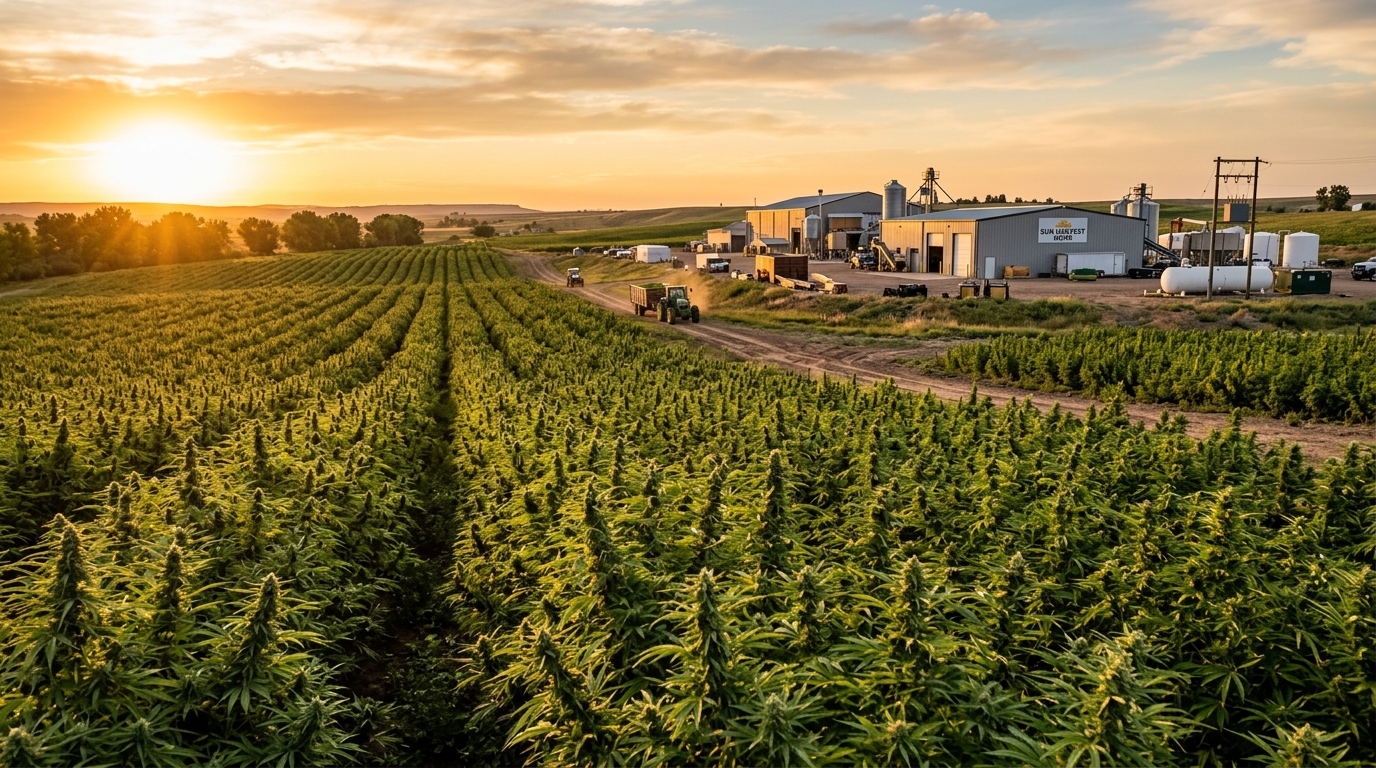
The hemp and cannabis industries, while botanically related, face distinct challenges that require distinct solutions. Both come from Cannabis sativa L., but the legal definition separates them at the 0.3% delta-9 THC threshold established by the 2018 Farm Bill. This arbitrary regulatory line has created two parallel industries with different supply chains, testing requirements, market dynamics, and consumer bases — and in many cases, the solutions developed for one industry can be adapted to solve problems in the other. The 2018 Farm Bill legalized hemp cultivation federally, sparking a boom in CBD production that peaked in 2019-2020 before a painful correction. By 2021, CBD biomass prices had collapsed from $40/pound to $2-4/pound, and thousands of farmers who had converted acreage to hemp were left holding unsellable inventory. The lesson for the cannabis industry is clear: legalization without market infrastructure leads to boom-bust cycles. As more states legalize THC-containing cannabis, the industry needs to build processing capacity, distribution networks, and brand differentiation before supply overwhelms demand. Genetics standardization is perhaps the single most important lesson the hemp industry can offer cannabis. The 2018 Farm Bill's 0.3% THC threshold created an urgent need for hemp varieties that reliably test below the legal limit — going 'hot' (testing above 0.3% THC) can mean a crop must be destroyed. This drove rapid investment in hemp breeding programs focused on genetic stability and chemotype consistency. The cannabis industry is now facing its own version of this challenge: as testing requirements become more stringent and interstate commerce expands, the demand for genetically stable, well-characterized cultivars will grow. Clone Source's approach — verified genetics with documented breeder provenance and molecular testing — reflects this shift toward agricultural professionalism. Processing infrastructure is another area where hemp's experience is instructive. When hemp was legalized, there was a massive shortage of processing capacity — decortication facilities for fiber, extraction facilities for CBD, and specialized equipment for both. The cannabis industry faces a similar bottleneck, particularly in states with new adult-use programs. Extraction capacity, testing laboratory backlogs, and distribution logistics all become critical constraints during the ramp-up period after legalization. Forward-thinking cannabis companies are building processing partnerships before they need them, learning from hemp's painful lesson that growing the product is only the first step. The emerging fiber and industrial hemp market represents a sector where cannabis genetics expertise has direct commercial application. Industrial hemp varieties bred for fiber production can yield 3-5 tons of dry stalk per acre, suitable for textiles, construction materials (hempcrete), bioplastics, and paper. The genetic traits that matter for fiber hemp — stem height, bast fiber content, low branching — are completely different from the traits that matter for cannabinoid production, and they require a dedicated breeding approach. This is an area where Clone Source's genetics expertise could eventually translate, as the industrial hemp market matures and demand for specialized cultivars grows.
Hemp and Cannabis Industry Solutions
2026-07-08 — Industry