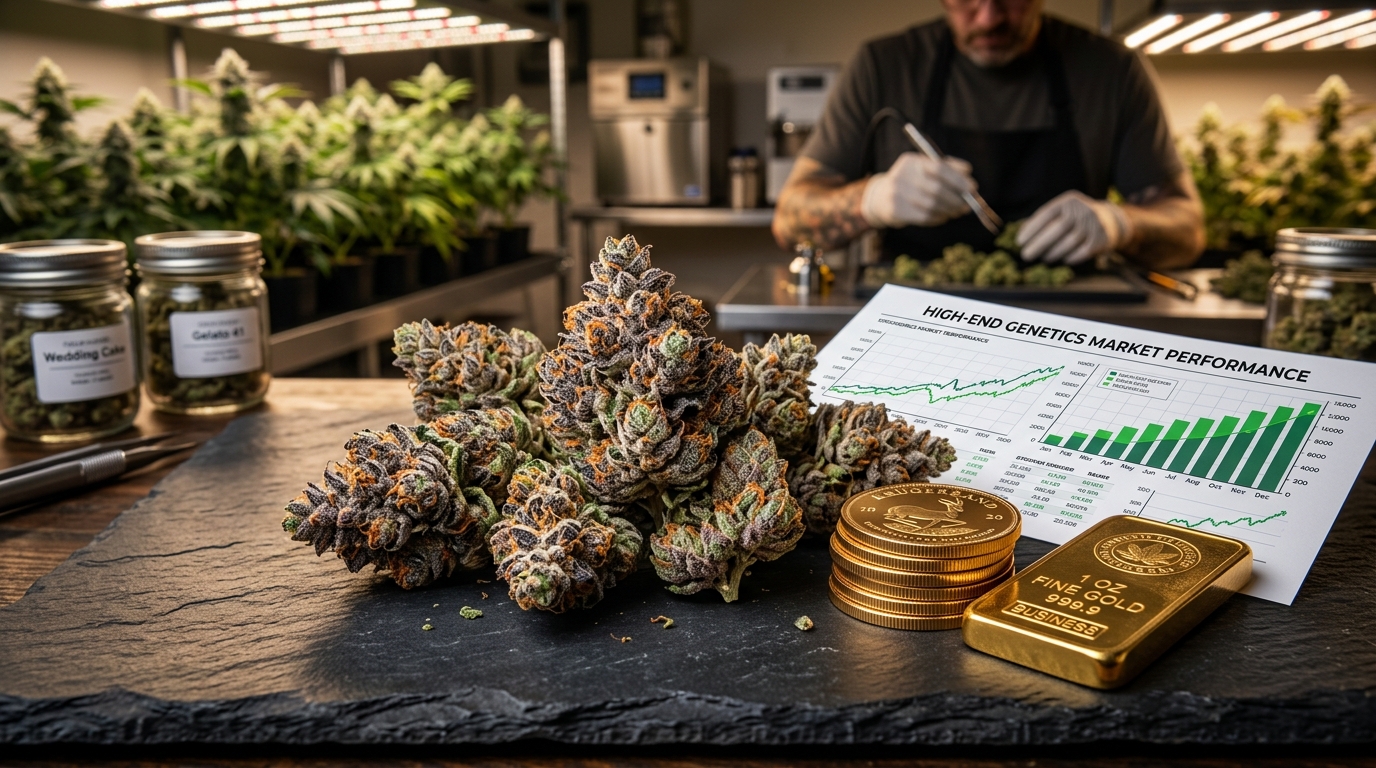
Every commercial grower has faced the same moment. You're looking at a clone list and there it is — a strain everyone's talking about. The kind of genetics that makes dispensary buyers text you before harvest. But the price tag is double what you'd pay for a standard verified clone. Do you pull the trigger? It depends on your market position, your buyers, and how you measure return on investment. A $100 exotic clone isn't automatically a better buy than a $50 workhorse. But it's also not automatically a luxury you can skip. This article walks through the economics of premium clones from a commercial perspective — no hype, no blanket recommendations. What Actually Makes a Strain 'Exotic' The word gets thrown around a lot. In practice, a strain earns the exotic label through some combination of rarity, sensory profile, and brand recognition. Understanding which of these factors actually drive value in your market is the difference between a smart buy and an expensive mistake. Rarity is straightforward. A phenotype that only exists in a handful of mother rooms commands a premium because supply is genuinely limited. This isn't marketing spin — it's basic scarcity economics. Sensory profile is what dispensary buyers notice first. Strains with unusual terpene combinations — think heavy limonene with an unexpected diesel backbone, or candy-sweet profiles that stand out in a sea of gas — command attention on the shelf. In markets where consumers browse by smell and bag appeal, this translates directly to sell-through speed. Brand recognition is the wildcard. A strain associated with a respected breeder or a winning competition pedigree carries built-in demand. The consumer has already decided they want it before they walk into the dispensary. That's marketing value you don't have to create from scratch. One thing exotic doesn't automatically mean: better potency. Plenty of classic workhorse strains test above 25% THC. Exotic status is more about uniqueness than raw numbers. The Price Gap — What Premium Actually Costs At Clone Source, standard verified clones like GMO or Biscotti OG run $50 per clone. Premium and exotic genetics — strains like Blueberry Gary, Candy Bezels, or Gelato 33 — run $100. That's a meaningful difference. For a 500-plant room, choosing all exotics over all standards adds $25,000 to your upfront clone costs. That number alone stops some growers in their tracks. But the math doesn't stop at the clone price. The real calculation is what happens at harvest. If an exotic strain commands $200 more per pound at wholesale, a 500-plant room producing two pounds per light can add tens of thousands to the top line. The variable that trips people up is consistency. A $100 clone that produces inconsistent flower loses its premium positioning fast. A $50 clone that performs identically every cycle is often the better long-term investment — provided the flower moves at market price. When Exotic Genetics Pay Off Dispensary buyers are asking for specific strains by name This is the clearest signal. If your wholesale customers are already requesting Blueberry Gary or Gelato 33, then paying a premium for those genetics isn't speculation — it's fulfilling existing demand. Growers who cultivate relationships with dispensary buyers often get strain requests before they plant. When three different shops are asking for the same strain, that's not a trend. It's a purchase order waiting to happen. Your brand competes on quality, not price Cultivators positioned as premium suppliers need premium genetics. If your wholesale pricing sits in the top tier of your market, you can't justify those prices with commodity strains. The genetics have to match the brand. You're building a long-term brand, not flipping harvests Exotic genetics pay off over time, not overnight. The first cycle proves the strain works in your facility. By the third cycle, you've dialed in the environment, the buyers know the product, and the economics start to favor you. Cultivators who treat exotic genetics as a one-cycle experiment usually lose money. Those who commit to developing a strain over multiple cycles build a reputation. The strain has a documented performance history Never buy an exotic clone on reputation alone. Ask the nursery: What are the expected yields? How does it respond to different nutrient schedules? What issues have other growers reported? A verified nursery should have answers to all of these. If they don't, you're paying a premium to be their beta tester. When Exotic Genetics Don't Pay Off Your business model is volume-over-margin Cultivators who compete on price and volume need different math. If your operation makes money by turning rooms fast and selling at market wholesale, a $50 difference per clone is $25,000 you could spend on lighting, nutrients, or labor. For more on choosing strains that maximize throughput, see our commercial strain selection guide. The market doesn't support the premium Not every market rewards exotic genetics. In regions where wholesale prices are compressed or where buyers purchase primarily by THC percentage rather than strain name, the premium doesn't translate to premium pricing. Before loading a room with exotics, ask your buyers what they'd actually pay more for. Their answer is often surprising — and more useful than anything you'll read online. The genetics are unstable or unverified This is where exotic becomes expensive in the wrong way. An unverified exotic clone — no pathogen testing, no genetic verification, no mother plant documentation — is a liability. One infected clone can introduce HLVd into an entire facility, and the economics go from bad to catastrophic. For a deeper look at how genetic drift affects commercial operations, read our piece on genetic drift in mother plants. How to Evaluate an Exotic Clone Before You Commit Start with the nursery. Ask for test results — HLVd, Fusarium, Pythium at minimum. If the nursery won't provide them, walk away. The price of the clone doesn't matter if it brings pathogens into your facility. Ask about mother plant age and maintenance protocol. A $100 clone from a tired, three-year-old mother that's never been re-introduced through tissue culture is a gamble regardless of the strain name on the label. Run a small batch first. Even a verified exotic strain may not perform the same way in your specific environment. A 4-8 plant test run at your facility tells you more than any spec sheet. Look at market data, not just hype. Strains that blow up on social media don't always convert to wholesale demand. Talk to actual buyers about what they're ordering and what price points they're hitting. Insights Most People Overlook Most growers evaluate exotic genetics as a simple math problem: clone price versus wholesale flower price. That math is necessary but insufficient. Here's what the spreadsheet misses. Trimming labor is a hidden cost differentiator. Some exotic strains produce flower structures that trim faster — fewer sugar leaves, better calyx-to-leaf ratio. A strain that saves 10 minutes of trim labor per pound across a 500-plant harvest is saving real money, cycle after cycle. The reverse is also true: some beautiful exotic flowers are trimming nightmares. Dispensary shelf velocity matters more than wholesale price. A $1,800 pound that sells in three days generates faster cash flow and builds buyer loyalty better than a $1,400 pound that sits for two weeks. Cash flow is oxygen in commercial cultivation. The first harvest is usually the worst harvest. Even experienced growers need a cycle or two to dial in a new strain. Budget for a learning curve — your third run of an exotic will almost certainly outperform your first. Phenotype consistency is more valuable than the strain name. Two growers can run the same strain name and produce completely different flower. What you're really paying for with a verified nursery is consistency — knowing that the clone you buy today is the same genetics that produced those test results. Your competitors are making the same calculation. If a particular exotic is the hot strain this season and every grower in your region loads up on it, the wholesale price drops at harvest. Differentiation means sometimes going where the herd isn't. Frequently Asked Questions Q: How much more should I expect to pay for exotic clones versus standard genetics? At most verified nurseries, exotic and premium genetics run roughly double the price of standard clones. In the Clone Source catalog, standard verified clones like GMO and Biscotti OG are $50 each, while premium and exotic strains like Blueberry Gary, Candy Bezels, and Gelato 33 are $100. The premium reflects the breeder work, genetic verification, and sometimes the simple economics of limited mother stock. Q: Can exotic genetics actually improve my wholesale pricing? Yes, but only in markets where buyers differentiate by strain. Premium flower from recognized exotic strains typically commands $100-$300 more per wholesale pound in competitive markets, though this varies significantly by region and season. The key is verifying that your specific buyers will pay the premium before you commit to a full room. Q: Are exotic strains harder to grow than commercial workhorses? Sometimes. Many exotic strains were selected for unique terpene profiles or bag appeal rather than vigor, disease resistance, or yield. This doesn't mean they're un-growable — but it does mean you should budget for a learning curve and avoid committing your entire facility to an untested strain in its first cycle. Q: How do I know if a premium clone is actually verified? A verified clone comes with documentation: pathogen test results (HLVd, Fusarium, Pythium), genetic verification confirming the strain identity, and information about the mother plant's age and maintenance history. If a nursery can't produce these documents or seems evasive about testing protocols, the clone isn't verified — no matter what the label says. Q: What's the minimum order size for testing a new exotic strain? Most commercial nurseries have minimum order requirements, but for evaluation purposes, running 4-8 test plants in your own environment before committing to a full room is standard practice. Check with the nursery about their evaluation policy — some offer discounted test packs specifically for commercial growers evaluating new genetics. Q: How often should I rotate exotic strains versus keeping proven performers? The most successful commercial growers typically run a core rotation of proven performers (60-70% of canopy) while experimenting with new genetics in the remaining space. This balances the reliability of known strains with the differentiation and potential upside of exotics. The exact ratio depends on your buyer relationships and market dynamics. Q: Do exotic genetics hold their value over time? Generally no — and that's actually fine. The premium on any specific exotic strain tends to decline as more growers acquire the genetics and supply increases. The growers who win with exotics aren't the ones who buy a strain and expect it to command a premium forever. They're the ones who consistently source the next differentiated genetics, build buyer relationships around their quality, and treat strain selection as an ongoing process rather than a one-time decision. Quality genetics are an investment, not a cost. The growers who win with exotics aren't the ones who buy the most expensive clone on the list. They're the ones who understand their market, verify their genetics, test before committing, and build buyer relationships that outlast any single strain's moment in the spotlight. Ready to explore verified exotic genetics for your commercial operation? Browse our current clone inventory — every strain comes with full pathogen testing documentation and verified genetic lineage. Questions about bulk ordering or strain selection? Contact our team for a consultation tailored to your facility.
The Economics of Exotic Genetics — When Premium Strains Pay Off for Commercial Growers
2026-07-09 — Commercial